You're staring at the checkout button again, wondering whether that $18 dress is going to arrive looking like the photo, and whether the “cheap” order will still be cheap once Canada Post, duties, and return shipping enter the chat. If that sounds familiar, you're not hunting for another random fast-fashion site. You're looking for a Shein alternative Canada shoppers can trust, one that makes the final bill clearer and the return process less punishing.
| Store | Price Range (CAD) | Shipping to Canada | Return Policy | Quality Rating | Sustainability |
|---|---|---|---|---|---|
| Fashion, Bags & More | CAD-priced catalogue | Ships with Canada in mind | Policy page available | Mixed to solid, category-dependent | Basic store transparency |
| Kotn | Mid-range basics | Canada-friendly | Check store policy | Strong on staples | Better-known for sustainability positioning |
| Free Label | Higher than ultra-budget fast fashion | Canada-focused | Check store policy | Strong for basics and sizing range | Made-in-Canada angle |
| Quince | Value-oriented for materials | Ships to Canada | Check store policy | Often better than bargain imports | Better than pure fast fashion |
| Reformation | Premium | Ships to Canada | Check store policy | Strong, fashion-forward | More sustainability-forward |
| Lambert | Accessories-focused | Canada-friendly | Check store policy | Solid for minimalist accessories | Ethical materials emphasis |
Table of Contents
- Why Canadian Shoppers Are Moving Beyond Shein
- The Canadian Online Fashion Market at a Glance
- Top Shein Alternatives for Canadian Shoppers Compared
- Understanding Landed Costs and Customs for Cross-Border Orders
- How to Reduce Returns and Shop Smarter Online
- Recommendations by Shopper Type
- Frequently Asked Questions About Shein Alternatives in Canada
Why Canadian Shoppers Are Moving Beyond Shein
You know the feeling. You order a few “simple” pieces, maybe a dress, a pair of shoes, and some jewellery, then spend the next two weeks tracking a parcel that seems to be taking the scenic route through the planet. When it finally shows up, the sizing is off, the fabric feels nothing like the listing, and a return looks annoying enough that you keep the item anyway, even though you shouldn't.
That frustration is exactly why Canadian shoppers are widening the net. Shein's own Canada return policy does soften the first return on eligible orders, but it charges CAD 9 for the second and subsequent returns from the same order, which changes the economics fast when you're buying several fit-sensitive items at once. For dresses, two-piece sets, and footwear, that fee structure punishes trial-and-error shopping, especially if you're used to ordering multiple sizes to hedge against inconsistent fit. The return policy detail matters because Canadian apparel e-commerce is already large enough to support specialised alternatives, and online demand isn't a niche behaviour anymore. Canada's apparel e-commerce market hit C$6.9 billion in 2023, still represented 19.4% of all apparel sales, and Trendex projected a further 0.9% increase in 2024 plus 6.1% cumulative growth from 2023 to 2027 Retail Insider.
What Canadian shoppers are actually rejecting
The issue isn't just price. It's the combination of uncertain landed cost, inconsistent sizing, and reverse-logistics friction. Canadians are increasingly looking for stores that quote in CAD, ship faster domestically or through well-run Canadian routes, and don't make returns feel like a penalty box.
Practical rule: if a store only looks cheaper before checkout, it isn't cheaper.
A good Shein alternative Canada option should win on more than one lever. It should keep the sticker price reasonable, but also reduce duty surprises, make sizing more predictable, and give you a return path that doesn't eat the value of the whole order. That's the benchmark I use when I shop, and it's the benchmark that matters for Canadian buyers who are tired of paying for guesswork.
The Canadian Online Fashion Market at a Glance
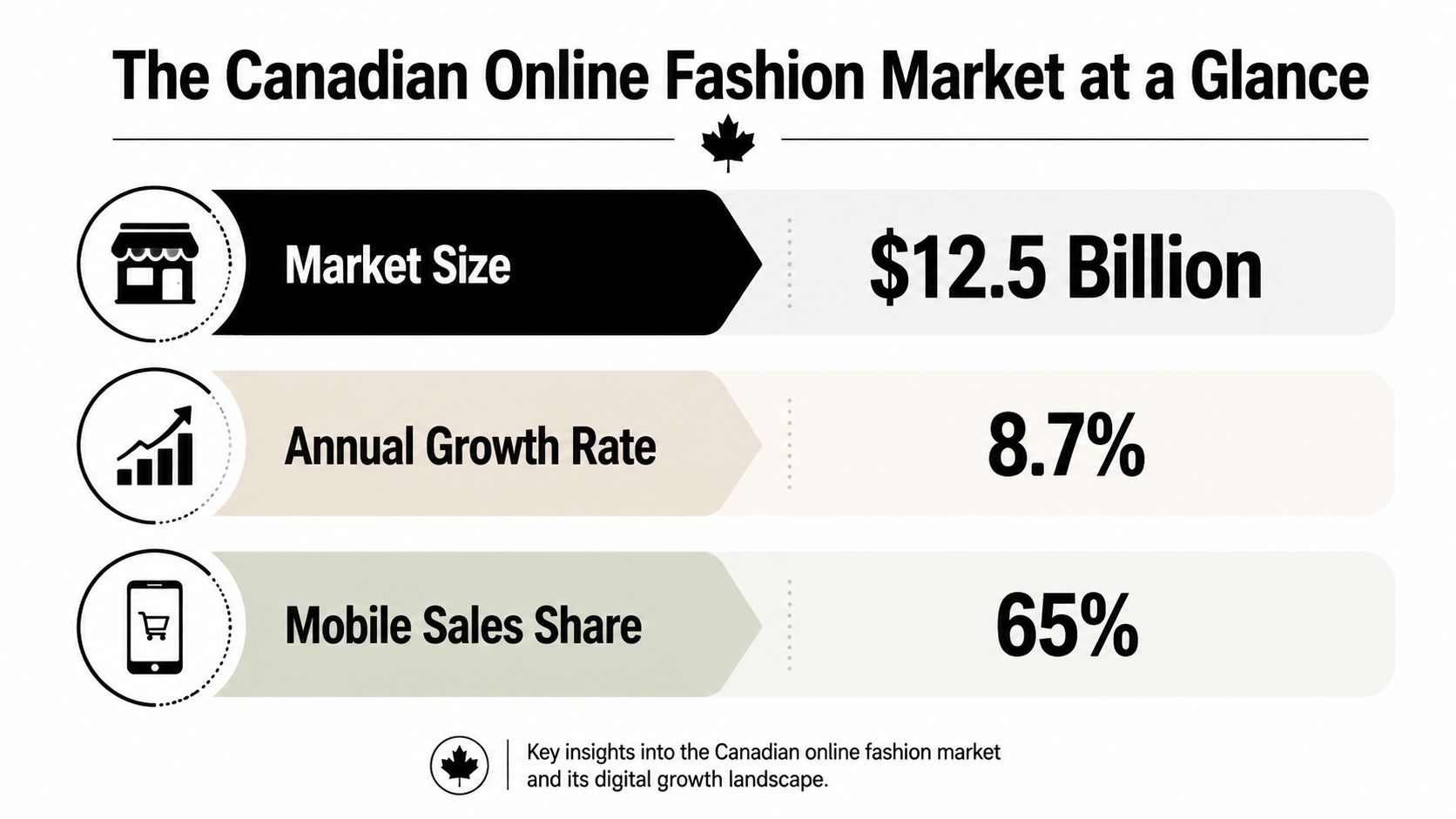
Canadian shoppers already buy online often enough to support better Shein alternative Canada options. Canada Post consumer polling found 82% of Canadians had purchased clothing and/or accessories online, with 69% buying clothing, 49% buying footwear, 41% buying jewellery or watches, 34% buying handbags or wallets, and 34% buying outerwear Foundation Mag. That mix matters because people are not just buying disposable tops. They are ordering categories where fit, fabric, and return handling decide whether the purchase is worth it.
The same poll found shoppers spent an average of $330 on their most expensive online clothing or accessory item. That is a clear signal. Canadian buyers will spend when the item feels worth the risk, but they still expect predictable sizing and a return process that does not wipe out the value of the order.
What that means for store selection
The market is broad enough to support different kinds of alternatives. A shopper looking for women's wear, men's basics, shoes, handbags, or accessories has options that can be priced in CAD and handled through one checkout. That is where a cross-category store like Fashion, Bags & More can make sense for shoppers who want one cart for dresses, tops, sets, shoes, and accessories instead of juggling several sites.
Fit-sensitive pieces need a different standard. A listing like Sexy Bikini 2023 Bandeau Swimsuit Female Swimwear Women Lace Up Mini Thong Bikinis Sets Swimming Beach Wear for Bathing Suits shows why. The item snapshot lists Nylon and Elastane, wire-free support, a low waist, and size guidance tied to measurements. That is the kind of detail Canadian shoppers should demand before buying swimwear or any other item where return shipping can eat into the deal.
Why the market can support better alternatives
A busy online market does not guarantee better quality. It does give shoppers more room to compare the full cost of ownership, including duties, shipping, and returns. If a store hides fit details or turns a return into a hassle, there are enough other options now to walk away. The Canadian market already shows that shoppers are willing to do exactly that.
Top Shein Alternatives for Canadian Shoppers Compared
Here's the blunt version. The best Shein alternative Canada shoppers should consider isn't just the cheapest site, it's the one that gives the cleanest total cost and the least painful return experience. That usually means a store that prices in CAD, shows clearer size information, and doesn't turn every return into a reverse-logistics headache.
| Store | Price Range (CAD) | Shipping to Canada | Return Policy | Quality Rating | Sustainability |
|---|---|---|---|---|---|
| Fashion, Bags & More | CAD-priced catalogue across multiple categories | Canada-friendly storefront with region selection | Published refund policy page | Good for coordinated categories and basic clarity | Neutral, with standard store transparency |
| Kotn | Mid-range | Canada-friendly | Check current policy | Strong for staples | Sustainability-forward positioning |
| Free Label | Mid-range to higher | Canada-focused | Check current policy | Strong for extended sizing and basics | Made-in-Canada approach |
| Quince | Value-oriented | Ships to Canada | Check current policy | Often better construction than bargain imports | Better material transparency than fast fashion |
| Reformation | Higher | Ships to Canada | Check current policy | Strong fashion finish | More sustainability-forward |
| Aritzia | Mid-range to premium | Canada-based | Check current policy | Strong on trend-led wardrobe pieces | Mixed, depends on line |
Fashion, Bags & More is practical if you want a single storefront for dresses, tops, sets, sleepwear, footwear, handbags, jewellery, and men's basics in CAD. That kind of category breadth matters more than people admit, because it lets you build one order instead of scattering small purchases across multiple sites. The store's published policies also give you a basic post-purchase roadmap, which is more than you get from many bargain-first competitors.
Kotn and Free Label are the cleaner bets if your priority is wardrobe basics with a Canadian angle. Quince is worth a look if you care more about material value than trend speed. Reformation is the opposite end of the spectrum, better for shoppers who want a more polished look and are willing to pay for it. Aritzia remains relevant for trend-led basics, but it doesn't solve the ultra-budget problem.
How I'd rank them by shopping need
Practical rule: if you buy a lot of fit-sensitive pieces, return simplicity matters as much as price.
- Lowest-friction category shopping: Fashion, Bags & More, because the store covers several fashion categories in one place and prices in CAD.
- Better basics: Kotn or Free Label, especially if you want fewer wild swings in fabric and fit.
- Better material value: Quince, when you want something that feels more substantial than fast-fashion filler.
- More polished aesthetic: Reformation, when you want the outfit to do the talking.
- Everyday trend pieces: Aritzia, if you're okay paying more for a familiar Canadian retail experience.
I'm deliberately not pretending every store here solves the same problem. Some are better on quality, some on sustainability, some on convenience. The smart move is to match the store to the job, instead of expecting one retailer to be cheap, trendy, ethical, and flawless all at once.
Understanding Landed Costs and Customs for Cross-Border Orders
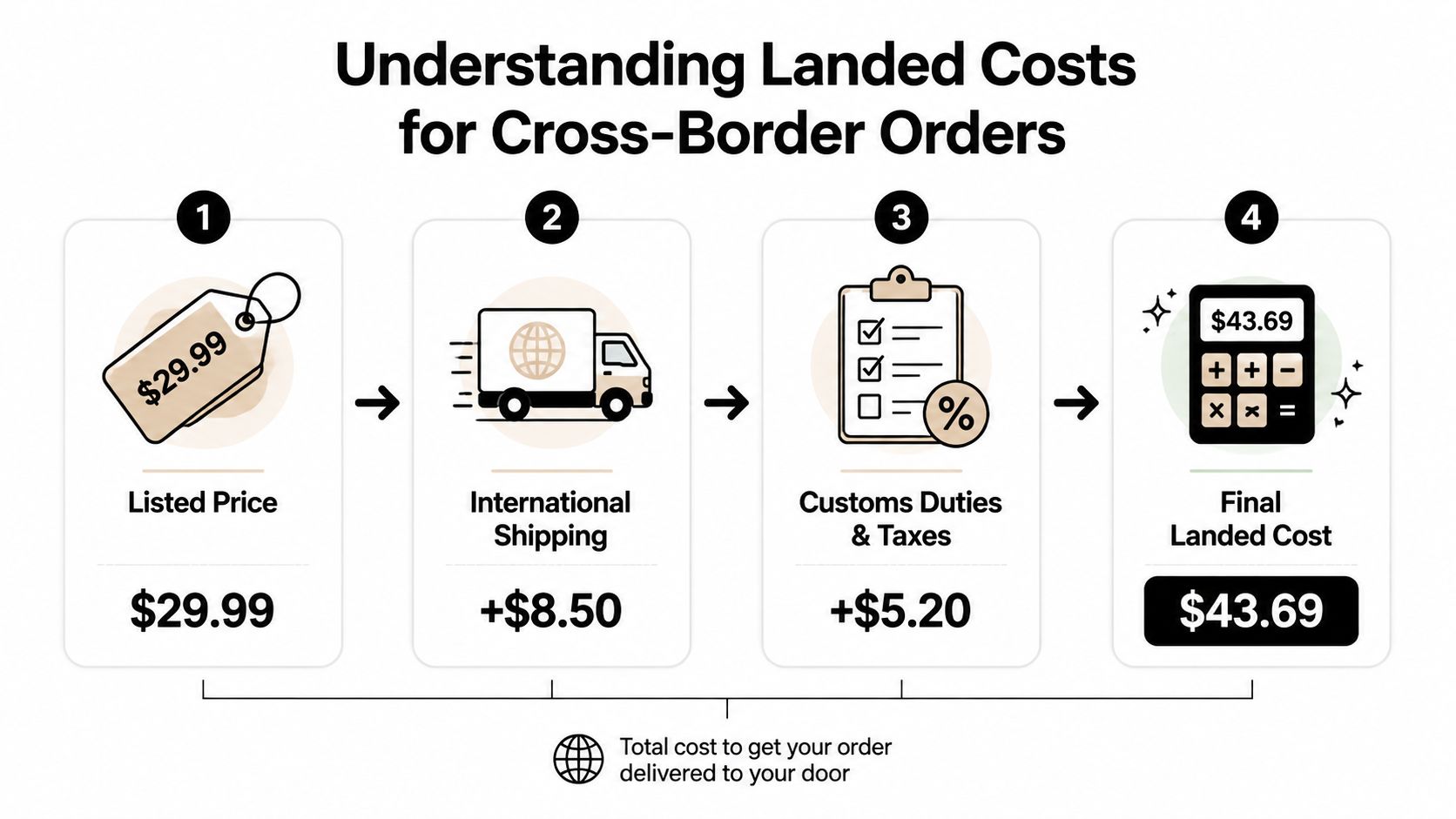
The listed price is usually the least useful number in the cart. For Canadian shoppers, the key question is whether the item still feels like a deal after shipping, taxes, and any duty surprises. CBSA says mail imports over CAD $20 are generally subject to GST/HST and possibly duty, while courier imports from the U.S. and Mexico follow different de minimis thresholds CBSA. That is why shipping method and country of origin matter far more than most bargain listicles admit.
Cheap international apparel can stop being cheap fast. A cross-border order may look fine at checkout, then climb once taxes, courier handling, or duties land on the final bill. If you have ever opened a parcel and immediately regretted the total, you already know how this plays out.
The video above walks through the landed-cost math in plain terms, which is useful if you keep getting blindsided by the final bill.
What to check before you buy
Start with the boring details. Check where the item ships from, whether duties are collected up front, and whether the store has a Canadian-friendly returns process. If the product page stays vague, assume the landed cost will be worse than the sticker price suggests.
Reverse logistics matters just as much. Independent Canadian e-commerce guidance pegs domestic return shipping at about CAD 12 to 16 per parcel and total return handling at roughly CAD 27 on average Expert Shipping. That gives you a real benchmark for any retailer competing on low-friction apparel returns. A store with prepaid labels or QR drop-off usually feels far easier to shop than one that leaves you carrying the whole hassle yourself.
Fit risk also drives total cost. Dresses, matching sets, and other fit-sensitive pieces are where return rates climb fastest, so the cheapest-looking option is often the one you end up sending back. That is why a product page with clear measurements and fabric notes beats flashy styling shots every time. If you want a concrete example of the kind of listing that should make you slow down and check the details, the page for New Style Cross Border Dress For Euro American Foreign Trade is exactly the sort of thing worth reviewing for origin, fabric, and fit notes before you buy.
The deal only works when the full landed cost stays tolerable and the return process does not erase the savings.
How to Reduce Returns and Shop Smarter Online
Fashion returns are expensive because fit is expensive. Canadian fashion planning benchmarks put apparel return rates at around 30%, compared with about 19–21% blended across categories, and a 2024 benchmark for the Canadian fashion market reported a median AOV of US$136 and a return rate of 18.7% overall ecommerceDB. That gap is the whole game. Clothes return more often than hard goods, so the store that helps you avoid the wrong size usually wins the wallet war.
Read the product page like a skeptic
Start with the size chart, not the model photo. Look for actual body measurements, garment measurements, and fabric composition. If the listing only says “true to size” without context, treat that as a weak signal, not a guarantee.
Practical rule: if the sizing detail is thin, the return risk is probably high.
Customer photos matter more than polished product images because they show drape, opacity, and proportion on real bodies. That's especially useful for dresses, two-piece sets, and swimwear. Product pages that include measurements and multiple reviews are easier to trust than pages that rely on a single flattering shot.
Reduce mismatch before it starts
Co-ordinated sets can be a smart buy because they remove some of the guesswork around styling. That's one reason Canadian shoppers often do better with stores that offer matching tops, bottoms, and accessories in one cart, rather than forcing separate purchases from different retailers. For swimwear, a detailed listing like the ZerZerOne bikini snapshot, with Nylon, Elastane, wire-free support, and measurement-based sizing, is far more useful than a bare-bones product card.
A few rules keep returns down:
- Compare your measurements first: don't order by S, M, or L alone.
- Check fabric content: stretchy blends behave differently from rigid fabrics.
- Read care notes carefully: if a piece needs delicate handling, expect less forgiveness in fit and finish.
- Use photo reviews: real shoppers reveal transparency, length, and stretch better than product shots.
Fashion, Bags & More fits this advice better than many listicle stores because its catalogue spans dresses, two-piece sets, sleepwear, lingerie, shoes, handbags, and jewellery in one place. That makes it easier to build coordinated outfits without scattering your risk across multiple websites. If you're trying to reduce returns, one coherent catalogue beats a messy mix of tiny imports.
Recommendations by Shopper Type
If you want the lowest out-of-pocket pain, choose the store where the total bill is easiest to predict. For the budget-first shopper, I'd start with Fashion, Bags & More or Quince. Fashion, Bags & More works better if you want a broad assortment in one cart, while Quince suits shoppers who care more about material value than trend turnover.
If fabric feel and construction matter more than the cheapest sticker price, Kotn and Reformation deserve a look. Kotn makes more sense for clean, wearable basics, while Reformation fits when you want a more polished fashion statement and can accept higher pricing.
Practical rule: buy the retailer that solves your main problem, not the one with the prettiest homepage.
Match the store to the job
- Sustainability-conscious shopper: Kotn or Free Label, because their positioning is more clearly tied to ethical or local production values.
- Plus-size shopper: Free Label is the strongest fit here because it is known for broader sizing, and the store's sizing approach is easier to line up with body measurements.
- Urgent shopper: a Canada-friendly store with domestic-first fulfilment is the safer play, because cross-border timing is where online fashion gets messy fast.
- Accessories shopper: Lambert is worth a look if you want minimalist bags and accessories with a cleaner aesthetic.
- All-in-one shopper: Fashion, Bags & More, because it bundles apparel, shoes, jewellery, handbags, and lingerie in one storefront.
For a curvier fit in a long-dress format, the product 2025 Spring Summer New Ramie Floral Dress Loose Cotton Linen A Line Long Dress Plus Size For Curvy Women shows the kind of listing that does two jobs at once. It signals plus-size positioning and a relaxed silhouette, which is the kind of detail Canadian shoppers should want before paying for shipping, duties, and a possible return.
Frequently Asked Questions About Shein Alternatives in Canada
Do Canadian alternatives move as fast as Shein?
Usually not at Shein's pace, and that's fine. What you gain is more predictable shipping, clearer CAD pricing, and fewer unpleasant surprises at the door. Faster isn't useful if the sizing is off and the return is awkward.
Are domestic stores always cheaper once you count everything?
Not always, but they're often easier to judge. The advantage is transparency, because you can see the price in CAD and avoid the customs guessing game that hits many cross-border orders CBSA.
What matters most on product pages?
Fabric content, garment measurements, and return terms. If a store gives you those three things clearly, you're in much better shape than you are with a vague, photo-only listing.
Can I still find trend pieces without going back to Shein?
Yes. You'll probably buy fewer ultra-cheap items and more intentional ones, but that's a better trade for most Canadian shoppers. The fewer random orders you place, the less you lose to fit mistakes and return friction.
If you want a smarter way to shop fashion in Canada without gambling on duties or flimsy sizing, start with Fashion, Bags & More. It gives you a CAD-priced place to compare dresses, shoes, bags, jewellery, and men's basics without splitting your order across half the internet.
Made with the Outrank tool