You're probably not shopping for block heels in a vacuum. You're trying to solve a real day: commute in the morning, desk or service hours through the afternoon, then dinner, a client event, or family plans after work. That's exactly where many heels fail. They look sharp on the product page, then start punishing your forefoot before lunch.
That's why womens block heels keep earning their place in Canadian wardrobes. They're one of the few heel styles that can still look polished while handling walking, standing, and weather shifts a lot better than slimmer heel shapes. The trick is knowing which pairs are wearable, and which ones only borrow the language of comfort.
Table of Contents
- Why Block Heels Are the Practical Choice for Canadian Women
- Understanding Stacked Heel Construction and Stability
- Selecting Wearable Heel Heights for All-Day Use
- Navigating Width and Fit Beyond Standard Sizing
- Market Growth and Expanding Options for Canadian Shoppers
- Styling Block Heels with Coordinated Outfits
- Your Quick Reference Checklist for Choosing Block Heels
Why Block Heels Are the Practical Choice for Canadian Women
By 8:30 a.m., many Canadian shoppers have already tested their shoes on a driveway, a station platform, wet sidewalk, office tile, and elevator thresholds. A narrow heel can feel fine in a fitting room and noticeably less secure by the second surface change.
Workplace rules shifted the standard as well. In British Columbia, employers are not permitted to require high heels if that creates a risk of injury, and WorkSafeBC guidance helped push the conversation toward safer footwear choices for women at work. That matters because shoe decisions are no longer just about dress codes. They are also about slip risk, stability, and whether a pair can hold up through a full day on hard indoor floors and uneven outdoor pavement.
Block heels meet that brief better than many dressier options.
The reason is practical. A wider heel base usually gives the rearfoot a steadier landing point, which reduces the small corrective movements your ankle and calf have to make with every step. Over a long day, that trade-off matters. Less wobble often means less fatigue through the forefoot and lower leg, especially for shoppers who split time between standing, commuting, and short walks outdoors.
I usually steer Canadian shoppers toward block heels when they need one pair to cover office wear, client meetings, events, and transit. They still add height and polish, but they tend to work better with the conditions people face here, including slick entryways, textured sidewalks, and long periods on concrete or commercial flooring.
They are also easier to shop by fit, which matters more than many style guides admit.
A good block heel often makes sense if your day includes:
- Frequent surface changes, such as pavement, tile, carpet, and lobby stone.
- Long wear periods, where changing into flats is not realistic.
- Work settings with safety expectations, especially where stable footing matters more than a sharp heel profile.
- Width concerns, since a more supportive heel shape pairs better with brands that offer wide or extra-wide fittings.
That is why womens block heels keep showing up as the practical choice in Canada. They suit current workplace expectations, they line up better with basic comfort mechanics, and they give shoppers more room to prioritize fit instead of forcing style to carry the whole decision.
Understanding Stacked Heel Construction and Stability
A woman leaving Union Station at 8 a.m. and still in the same heels at 6 p.m. needs more than a wide-looking heel. She needs a shoe that stays planted on tile, concrete, elevator thresholds, and winter-wet entry mats. In practice, stability comes from construction details, not the label.
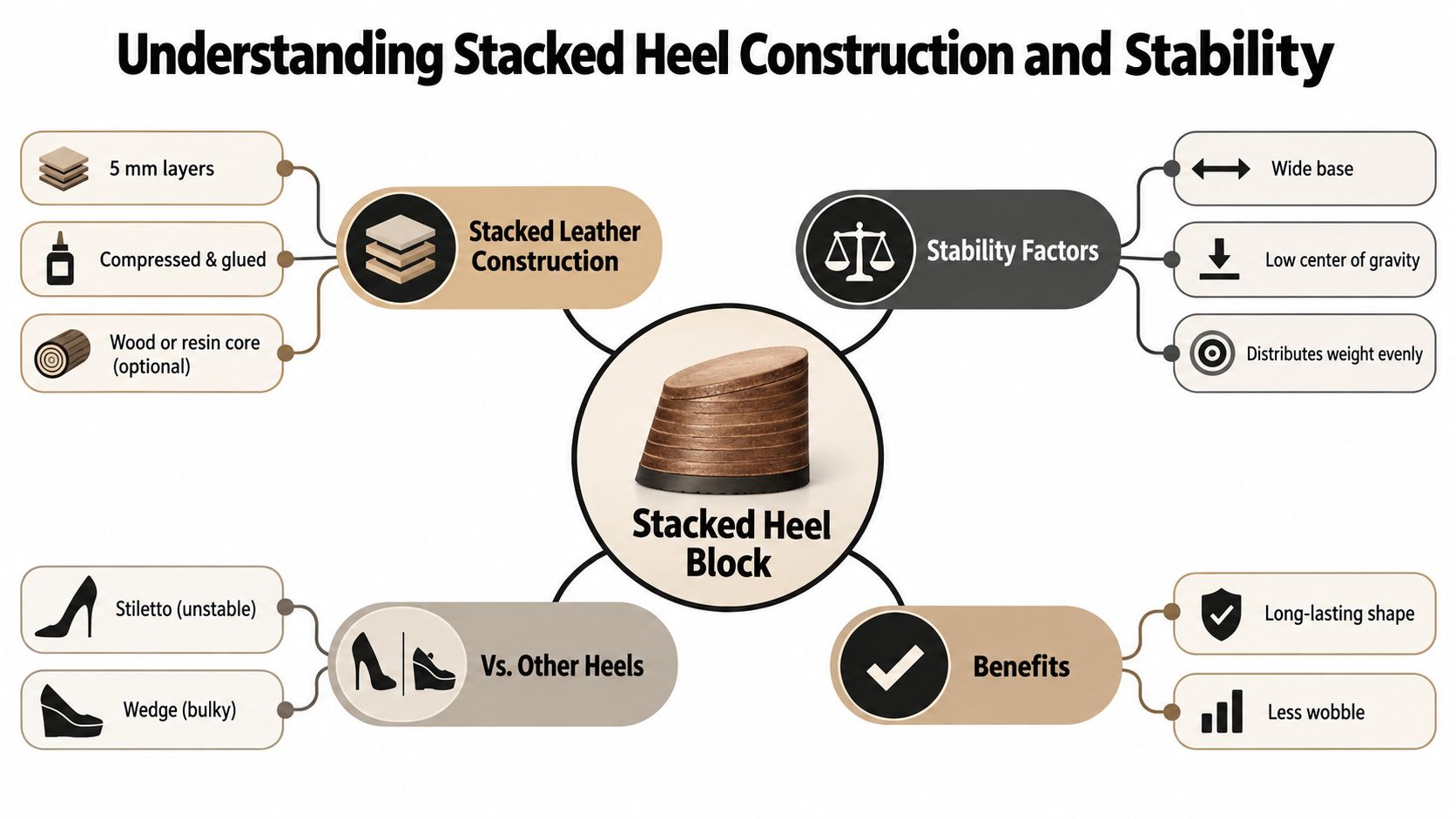
A stacked heel usually means the heel is built in layers, often leather or leather-look material over a solid core. That layered build matters because it tends to hold its shape better than a thin, hollow-feeling fashion heel. The result is usually a firmer landing and less side-to-side roll.
That matters in Canadian workplaces where stable footwear can be more than a preference. In office, hospitality, and public-facing roles, employers still have obligations under provincial health and safety rules to reduce slipping and tripping hazards. A dress shoe will not replace job-specific protective footwear where CSA-approved shoes are required, but many women still need heels that handle polished floors, sloped parkades, and gritty sidewalks on the way in. A block heel with a well-built base is usually the safer choice than a narrow heel in those settings.
What stacked construction changes
The heel base affects how force travels up the shoe. A broader, straighter heel gives the rearfoot a larger platform at contact, which usually reduces the small ankle corrections that make unstable heels tiring. That does not remove forefoot pressure from heel height itself, but it can make each step more predictable.
I also watch the heel breast and toplift. If the back edge wears down quickly or the rubber cap is too small, the shoe starts to feel uneven fast, especially for heavier walkers or anyone covering several blocks a day.
How to read a product closely
Product photos can hide weak construction, so the details matter.
Check for these signs:
- A heel that sits squarely under the calcaneus, not pushed too far inward where it can feel tippy.
- A straight or only slightly tapered heel profile, which usually gives better lateral stability than a sharply pinched shape.
- A solid heel-to-sole join, with no visible gaps or twisting where the heel meets the outsole.
- A toplift with usable traction, especially for Canadian shoppers dealing with wet lobby floors and salt-smoothed sidewalks.
- An upper that holds the midfoot, since a loose vamp or soft ankle strap can let the foot slide even if the heel itself is broad.
- Width options, because a stable heel still fails if the forefoot is hanging over the footbed.
A block heel can still feel unstable if the shoe pitch is aggressive or the upper does not keep the foot centred over the base.
Block heel versus other common options
The trade-offs are straightforward.
| Heel Type | Main Strength | Common Drawback |
|---|---|---|
| Block heel | More stable base and easier control on mixed surfaces | Extra weight if the heel is heavily built |
| Stiletto | Cleaner, narrower look | Higher slip risk and more ankle correction on uneven ground |
| Wedge | Full-length ground contact | Less flexible through the step and often harder to fit cleanly in dress settings |
For all-day wear, the best womens block heels balance three things at once: a heel base that stays upright, a topline that holds the foot in place, and a width that matches how your forefoot sits. That combination matters more than trend details, especially for Canadian shoppers who need one pair to function across transit, office flooring, and weather-shifted walking conditions.
Selecting Wearable Heel Heights for All-Day Use
Height is where many good-looking heels go wrong. A block base helps, but it doesn't cancel out physics. If the heel gets too high, comfort drops quickly, even when the shoe still appears sturdy.
Canadian retail guidance often puts the most wearable heel heights in the 1 to 2 inch range, with 2 to 3 inches treated as a mid-heel band that still works for many shoppers, especially in block-heel styles, according to DSW Canada's women's heels category guidance. That range lines up with what many experienced buyers already know: lower block heels last longer over a full day.
What your foot is dealing with
Biomechanics research shows a clear pattern. As heel height and wear time increase, plantar load shifts from the hindfoot toward the forefoot, with higher pressure and impulse under the second and fourth metatarsal regions. After prolonged wear, forefoot pain and fatigue also increase, as described in this biomechanics review of women's high-heeled footwear.
That finding matters even if you only wear heels occasionally. A stable heel shape doesn't erase the forefoot pressure created by height. It only makes the shoe easier to balance in.
Block heel height guide for daily wear
| Height Range | Best For | Comfort Outcome |
|---|---|---|
| 1 to 2 inches | Commuting, office wear, long events, dinners with walking | Best endurance for all-day use |
| 2 to 3 inches | Work-to-evening dressing, parties, polished day events | Good balance of lift and wearability |
| Above 3 inches | Shorter wear windows, mostly seated events, style-first outfits | Fatigue shows up faster, especially in the forefoot |
How to choose the right height
Use wear time first, not outfit first.
- Choose low block heels if you'll be on your feet for hours, commuting, or walking more than expected.
- Choose mid block heels when you want a sharper silhouette but still need sensible wear time.
- Skip high block heels for “all-day” plans unless you already know that specific shoe works for your foot.
If you like a darker dressier look, this guide to black high heels can help you compare style choices against wearability rather than shopping by appearance alone.
Navigating Width and Fit Beyond Standard Sizing
Most sizing advice still centres on length. That's where shoppers get into trouble. A shoe can be the right size on paper and still feel wrong within minutes if the width, toe shape, or forefoot volume doesn't match your foot.
A major gap in Canadian footwear content is that women's sizes are usually mapped by foot length, while width information often sits separately in fit guides instead of mainstream style advice, as shown in this Canada-facing UGG size and fit guide. For block heels, that gap matters a lot.
Why block heels help some feet more than others
People often say block heels are comfortable as if that applies automatically. It doesn't. The heel base improves stability, but comfort still depends on whether the front of the shoe respects your foot shape.
Block heels often work better than stilettos for these shoppers:
- Wide forefeet because many block-heel dress shoes come with less aggressively narrow balance points.
- Bunions or toe-box sensitivity because a steadier heel can reduce the need to grip with the front of the foot.
- Shoppers crossing CA and US sizing because the number may translate, but width and upper cut can still vary meaningfully.
Fit check: If your foot spills over the insole edge or your toes feel pushed inward while standing still, the problem isn't “breaking them in.” It's usually the shape.
What to check before buying
Don't stop at the size label. Look for cues that affect wear.
- Toe-box shape: Almond and softly squared fronts are often easier than sharply pointed ones.
- Upper material give: Some materials soften with wear, while rigid uppers can stay unforgiving.
- Strap placement: A well-placed ankle or vamp strap can improve security without crushing the forefoot.
- Width notes in the listing: If the product page mentions fit at all, read that before looking at styling photos.
If you're comparing lower-profile heel options, this article on whether kitten heels are comfortable is useful because it highlights how heel shape and foot shape don't always solve the same problem.
Market Growth and Expanding Options for Canadian Shoppers
Canadian shoppers have more choice now than they used to, and that changes how you should shop for block heels. You no longer need to settle for the one “comfortable enough” pair available in basic black. The market is broad enough to be more selective about height, width feel, finish, and occasion.
A market analysis reported that women's footwear in Canada was expected to grow by 9.7% to reach CAD 4,181 million by 2025, with Aldo at 8.4% market share in 2020, Nike at 7.2%, and Adidas at 3.9%, according to GlobalData's Canada women's footwear market analysis. The same verified market backdrop also notes that non-athletic footwear is a major revenue segment, which is exactly where block heels sit.
What this means for the shopper
More market activity usually shows up in practical ways:
- Broader assortments across office, event, and casual-dress categories.
- More heel-height variation instead of every option clustering around one fashion trend.
- Better cross-shopping conditions because more brands are competing for the same customer.
- More occasion-specific options such as wedding guest, holiday party, and office-ready styles.
How to use that to your advantage
Don't buy the first pair that looks acceptable. Compare at least a few styles against the same checklist: heel height, toe shape, upper coverage, and whether the shoe suits your actual use case.
That's especially important with womens block heels because “comfortable” can mean very different things. One pair may be built for standing at work, while another is really just an easier-to-balance party shoe. A growing market gives you room to shop with standards.
Styling Block Heels with Coordinated Outfits
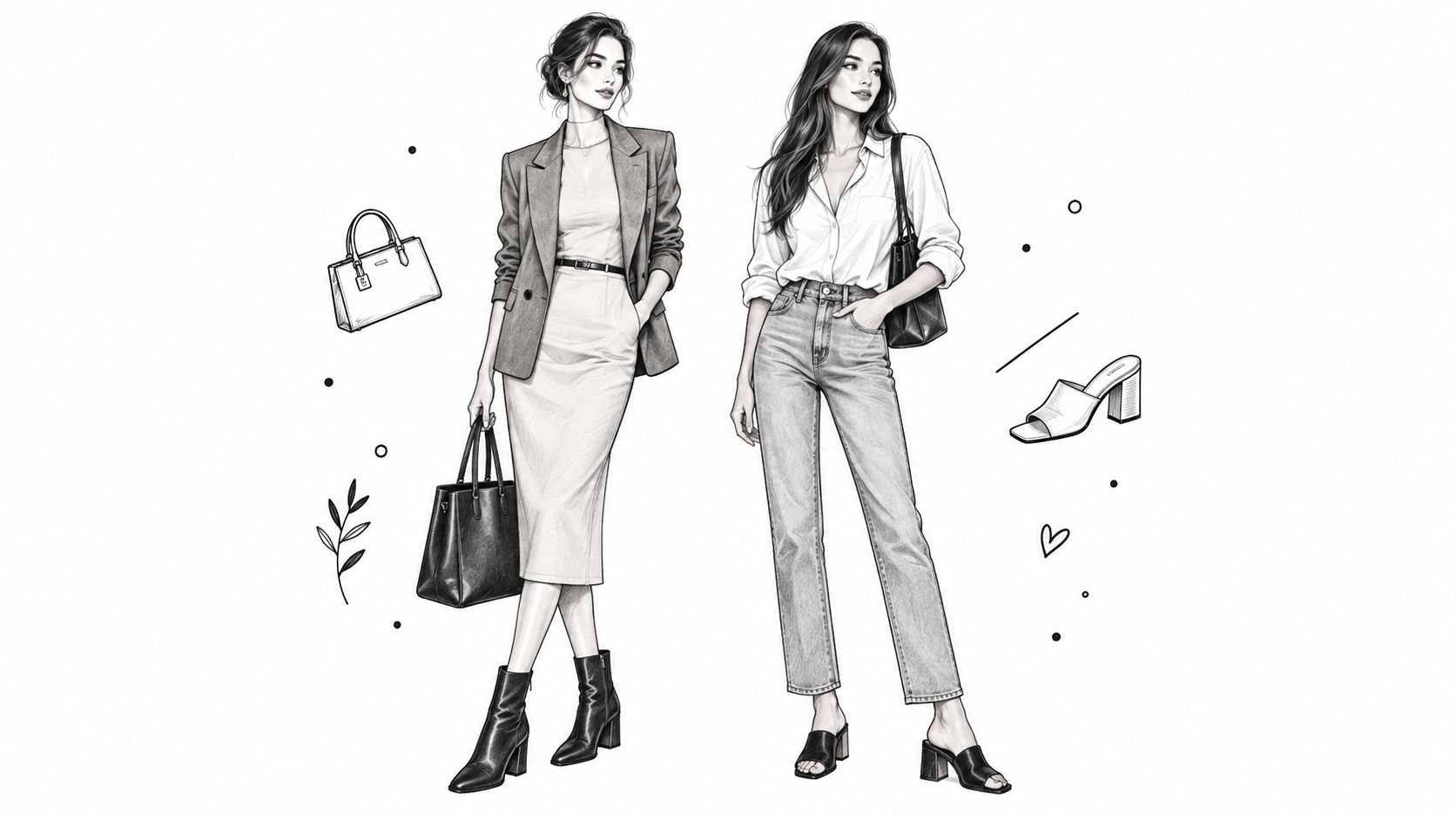
The strongest block-heel outfits usually look intentional, not fussy. A good pair anchors the outfit instead of competing with it, which is why block heels work especially well with coordinated dressing. They bring structure to softer fabrics and keep polished looks from feeling too delicate for real movement.
Outfit formulas that actually work
For office wear, a low to mid block heel pairs well with wide-leg trousers and a fitted knit top, or with a matching two-piece set that has clean lines through the waist and shoulder. The sturdier heel shape gives the outfit enough visual weight to balance fuller hems.
For events, block heels often look best when they echo the formality of the outfit without trying to outshine it. A midi dress, a jumpsuit, or a coordinated set in a dressier fabric usually works better than a heavily complicated hemline plus a chunky shoe.
Here are combinations that tend to hold up:
- Set plus low block heel for office days, lunches, and after-work plans.
- Simple jumpsuit plus mid block heel for dinners, holiday parties, and gallery-type events.
- Midi dress plus ankle-strap block heel for weddings or occasions where you'll stand and mingle.
- Straight-leg trousers plus closed-toe block heel when you want the finish of a pump with better day-long practicality.
Matching the shoe to the outfit mood
A pointed toe can sharpen a softer outfit, while a square or almond toe usually reads more modern and easier. Closed-toe styles lean more professional. Open-toe styles often feel better suited to indoor events or warm-weather dressing.
If you're comparing silhouettes, this take on pointed-toe kitten heels is helpful because it shows how toe shape can change the whole line of an outfit, even when heel height stays relatively restrained.
This video gives a useful visual sense of how heel shape changes outfit balance in practice.
The best pair is usually the one that works with at least three outfit types, not just one event look.
That approach keeps block heels from becoming occasional purchases that sit in the closet. It also makes them easier to justify if you're building a smaller, more functional wardrobe.
Your Quick Reference Checklist for Choosing Block Heels
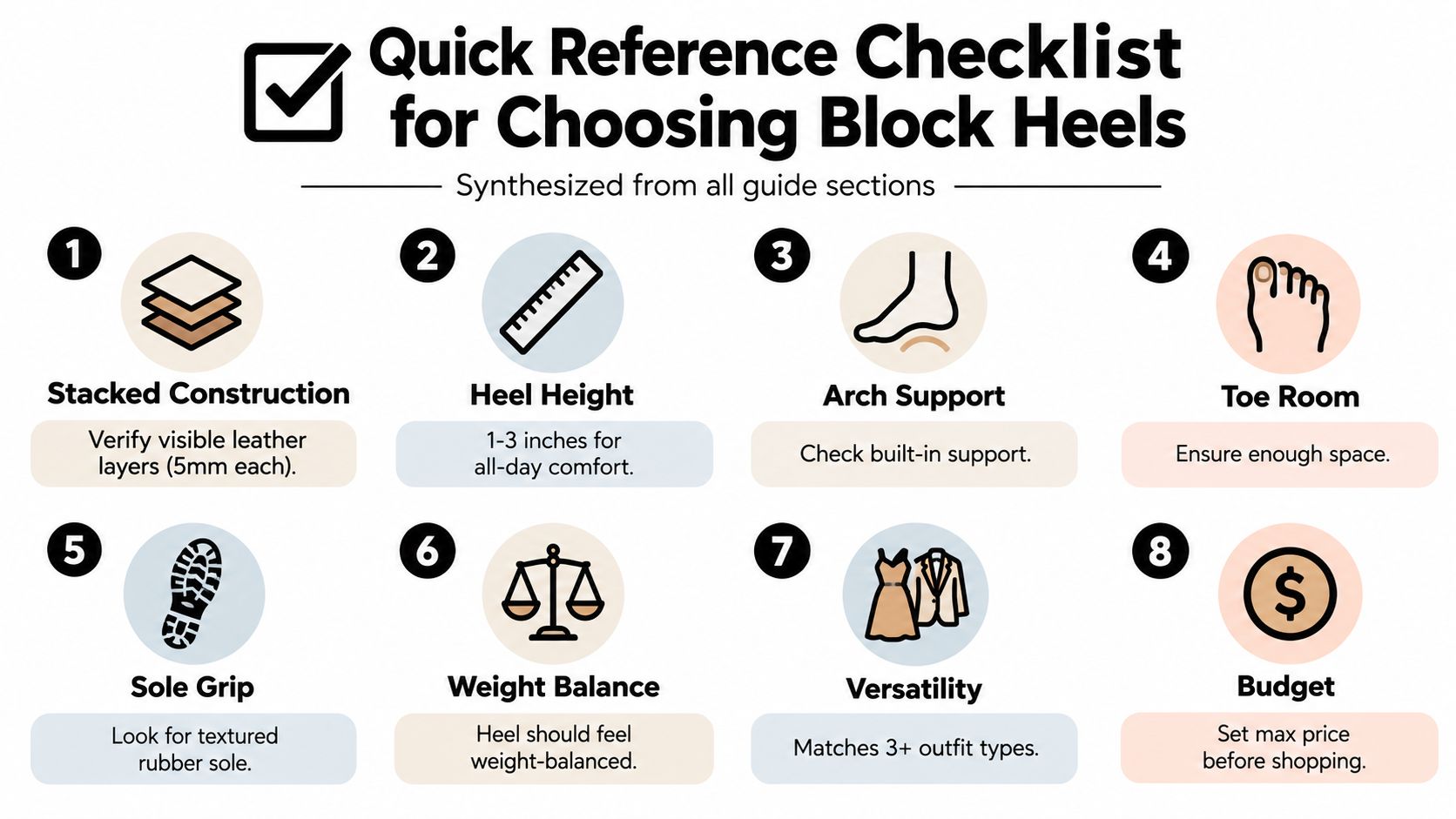
When a pair looks good online, it's easy to stop at colour and heel shape. The better approach is to screen block heels the way a buyer would. Comfort comes from several small decisions working together, not one marketing claim.
The shortlist to use while shopping
- Construction: Look for a heel that appears solid, balanced, and properly integrated with the sole.
- Height: Keep daily-wear pairs in the lower to mid range if you expect long wear.
- Forefoot room: Make sure the toe area suits your foot shape, not just the trend.
- Upper hold: Straps, vamp coverage, and overall security should keep your foot from sliding forward.
- Outsole grip: Smoother soles may feel dressier, but they're less forgiving on mixed surfaces.
- Use case: Buy for your real routine, not the idealised version of your social calendar.
- Outfit range: The pair should work with trousers, dresses, and at least one coordinated set or jumpsuit.
- Return judgment: If a shoe feels wrong standing still, it usually won't improve after hours of wear.
A simple decision filter
Ask yourself three questions before you check out.
First, can I wear these for the full amount of time I'm planning?
Second, does the front of the shoe fit my foot shape, not just my size?
Third, will I reach for them outside one narrow occasion?
If the answer to any of those is no, keep looking. The most useful womens block heels aren't the most dramatic pair. They're the ones you'll trust for work, events, and the in-between plans that make up most real wardrobes.
Fashion, Bags & More offers CAD-priced fashion, footwear, handbags, and coordinated women's outfits that make it easier to build looks around practical heels instead of buying shoes in isolation. If you're shopping for dressier pieces, everyday styling options, or outfit combinations that work with block heels, visit Fashion, Bags & More.