You're standing at the pool changing area with two suits in your hands. One is sleek and clearly made for movement. The other is a swimming costume with skirt, offering more coverage and an easier answer for sitting on a dock, walking along a beach, or joining family swim time. The problem is obvious: the skirt may make you feel more secure, but it can also ride up, hold water, or create drag when you start swimming seriously.
That trade-off matters more than the print or colour. A skirted swimsuit can be an excellent choice for casual pool use, resort days, lake trips, and relaxed water activities. It can also be the wrong choice for lap swimming, surfing, vigorous water aerobics, or any setting where excess fabric works against you. This guide breaks down the construction, fit, fabrics, care routine, and shopping filters that help you choose the right silhouette instead of just choosing the prettiest product photo.
Table of Contents
- Why a Swimming Costume With Skirt Is a Real Decision, Not Just a Style Pick
- How a Skirted Swimsuit Is Actually Built
- The Main Skirted Silhouettes and How They Compare
- Matching Skirt Length and Rise to Your Body and Activities
- Fabric, Care, and How to Keep the Skirt Performing
- Shopping the Catalog With Filters, Size Notes, and Return Cues
- Where a Skirted Suit Works Best and Where It Does Not
- Your Skirted Swimwear Checklist and Final Take
Why a Swimming Costume With Skirt Is a Real Decision, Not Just a Style Pick
A skirted swimsuit earns its place when coverage and comfort matter as much as movement. You might want to climb off a dock without adjusting a bikini bottom, sit on a poolside chair without exposing the seat of your suit, or walk from a resort room to the beach without adding a separate cover-up. In those situations, a skirt provides practical coverage, not just decoration.
The trouble starts when shoppers assume every skirted design behaves like athletic swimwear. A loose outer layer can catch water during a breaststroke kick, float away from the body, or bunch at the hip after you leave the pool. A sheer mesh skirt may look light on the hanger but cling to the legs when saturated. A skirted bottom with a weak waistband can shift even when the brief underneath fits correctly.
Practical rule: Buy the suit for the activity you'll do in it, not the activity shown in the product photograph.
Canadian swimwear history helps explain why this category still feels familiar. By the 1870s, women's bathing suits in Canada were established but restrictive and skirted, with the skirt described as the “popular and suitable garment for women” in historical research on Canadian bathing norms (Canadian historical fashion research). Those garments prioritised modesty rather than swimming performance, so today's buyer shouldn't confuse historical continuity with technical suitability.
The useful question is narrower: does this particular skirt stay controlled when wet? For a slow pool session, the answer may be yes. For repeated laps or aggressive kicking, a fitted one-piece or athletic tankini with swim shorts will usually make more sense.
How a Skirted Swimsuit Is Actually Built
A skirted swimsuit normally has three functional layers. The attached brief sits closest to the body and provides the essential coverage. A lining improves comfort and opacity. The outer skirt creates the visible shape and adds coverage over the hips and upper thighs.
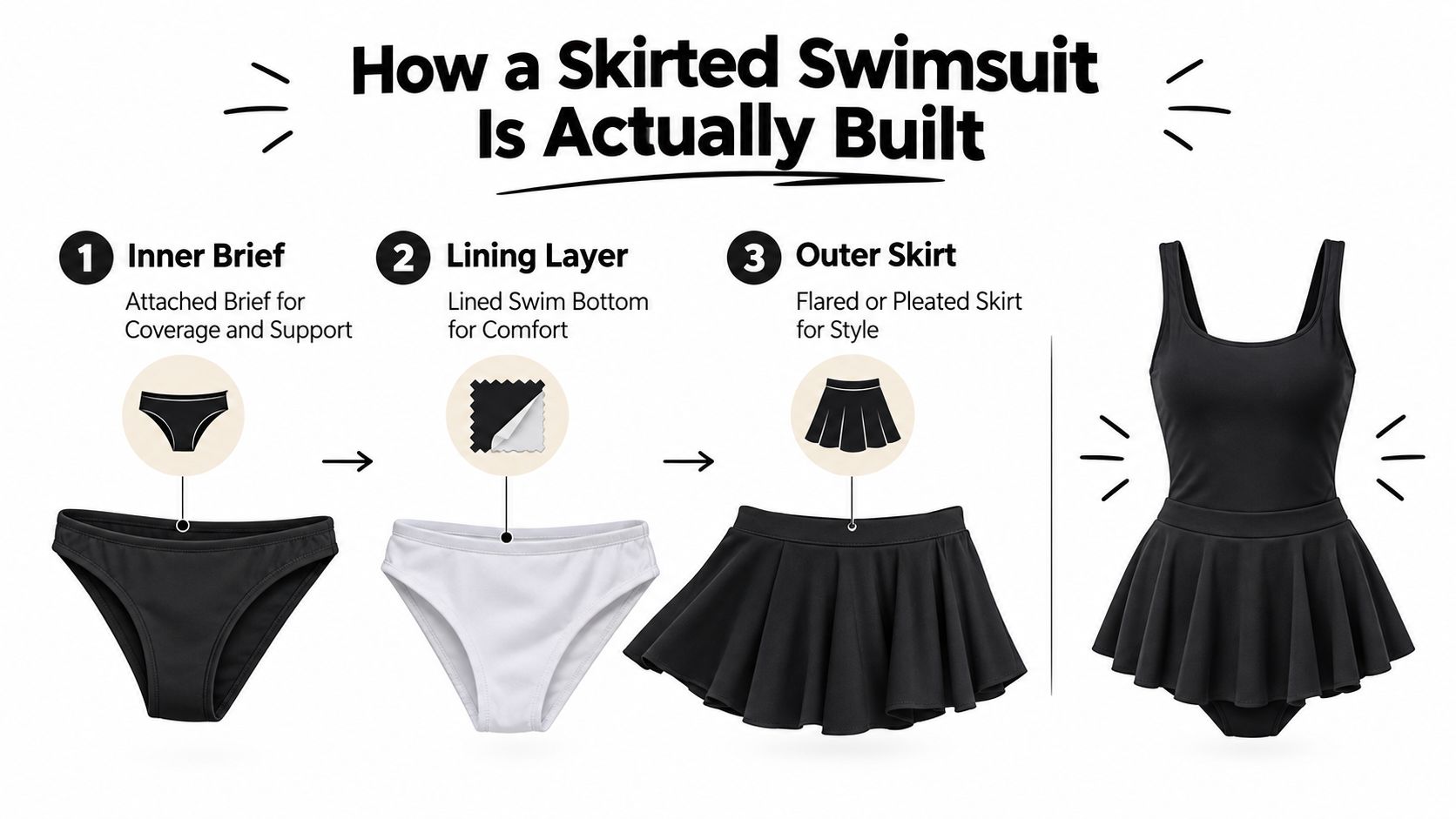
Start with the inner brief
The brief should fit like a secure swim bottom, not like loose underwear. It needs enough coverage at the front and back to stay in place when you sit, bend, and enter the water. If the brief is too large, the outer skirt won't rescue the fit. If it's too small, the skirt may pull upward because the entire lower section is under tension.
The lining is just as important. It reduces transparency when wet, limits skin irritation, and gives the garment a more stable base. Look for a cleanly finished leg opening rather than a raw edge that can curl or dig in.
Then assess the outer layer
The outer skirt may be flared, pleated, ruffled, wrap-style, or made from mesh. Each construction changes the way water moves around the body. A narrow A-line panel stays closer to the legs, while a full flare creates more space and more potential drag.
A tulle-skirt bikini set is a useful example. The lightweight mesh can look airy and decorative, but once wet it may cling, float open, or add resistance during a lap. The product information for Fashion, Bags & More's Women's Bikini Half-length Tulle Skirt Tassel Three-piece Suit identifies a polyester three-piece construction with a bra, skirt, and underwear, designed for swimming and wading (tulle-skirt bikini set details). That makes it more appropriate for relaxed water use than for sustained training.
Inspect the hold points
The waistband, side seams, hem, and attachment points decide whether the skirt remains wearable in motion. A firm but comfortable waistband should lie flat without cutting into the stomach. Reinforced seams matter where the skirt joins the brief or bodice. On active designs, a soft elastic or gripper finish at the inner hem can reduce ride-up.
A detachable wrap skirt gives you more styling flexibility but less certainty in the water. A stitched-on overlay is harder to adjust but generally stays more predictable. Ruffles and loose flounces look attractive, yet they're the first details I'd question if your priority is movement.
The video below offers another visual reference for how skirted swimwear is used and styled.
The Main Skirted Silhouettes and How They Compare
There isn't one universal skirted swimsuit. The lower half may be separate from the top, integrated into a swimdress, paired with a tankini, or attached to a one-piece. Those choices affect support, adjustability, and how much fabric moves through the water.
| Silhouette | Coverage | Support | Mobility | Best For |
|---|---|---|---|---|
| Separate swim skirt with bikini or tankini top | Moderate lower-body coverage, adjustable top coverage | Depends on the top | Good if the skirt is narrow and lined | Casual swimming, resort use, mix-and-match wardrobes |
| Swimdress | High torso and lower-body coverage | Usually easier to manage through an integrated bodice | Moderate, depending on skirt fullness | Family swimming, lounging, easy dressing |
| Tankini with fitted shorts and cover layer | High torso coverage, secure leg coverage | Often strong when the top has a shelf bra or supportive straps | Good at the legs, though shorts add fabric | Water play, casual swimming, active beach days |
| One-piece with overlay skirt | Continuous torso coverage and attached lower layer | Usually stable because the bodice and bottom are connected | Moderate, with less adjustment once wet | Poolside use, water walking, relaxed resort wear |
A separate swim skirt is the most flexible option. You can pair it with a supportive tankini, a higher-coverage bikini top, or a rash shirt. It's also the easiest silhouette to replace or mix with pieces you already own. The weakness is that two separate garments can shift independently.
A swimdress streamlines dressing because the bodice and skirt arrive as one piece. It can conceal more of the torso and seat, but a generous skirt may feel warm on a sunny deck and cumbersome in deeper water. Choose a restrained A-line rather than a full, floaty shape if you plan to swim rather than just wade.
A tankini with shorts and a longer cover layer is often the practical middle ground. The shorts provide more reliable leg coverage than a loose skirt, while the tankini gives you easier bathroom access than a traditional one-piece. The compromise is bulk, especially if the shorts and outer layer are both substantial.
An overlay one-piece gives the most integrated feel. It's less likely to separate at the waist, but you can't adjust the lower layer independently if the skirt fit isn't right. For a range of one-piece and coordinated beach silhouettes, review the one-piece swimsuit and beach skirt suit, then check the construction details rather than relying on the category name.
My recommendation is straightforward. Pick a separate skirt for flexibility, a swimdress for coverage and easy dressing, a tankini with shorts for active casual use, and an overlay one-piece when you want a single garment with fewer moving parts.
Matching Skirt Length and Rise to Your Body and Activities
Fit starts with bust, hip, and torso length. Measure the fullest part of your bust and the widest part of your hips, then compare both measurements with the brand's chart. Don't choose from a standard dress size and hope the stretch will solve everything. Swimwear grading varies, and the skirt can fit while the bodice does not.
Torso length is especially important in a one-piece or high-waisted design. A short torso paired with a high rise can create bunching under the stomach. A long torso in a fixed one-piece can pull the brief upward and make the skirt sit higher than intended. In a two-piece, you get more control over the waist position, but the top and bottom still need to overlap comfortably when you move.
Use shape as a fitting guide, not a rulebook
For a pear-shaped figure, a lightly flared A-line skirt that finishes around mid-thigh can skim the hips without clinging. Avoid excessive gathering at the widest point if you don't want extra visual volume there. An apple-shaped figure often benefits from a higher rise and a structured waistband that sits smoothly rather than a thin elastic edge that rolls.
A longer torso or taller frame generally needs a skirt with enough vertical length to avoid looking abruptly cropped. Petite shoppers usually get a cleaner proportion from a shorter, controlled hem rather than a long, heavy panel. These are starting points, not requirements. The deciding test is whether the skirt stays level when you walk, sit, and raise your arms.
| Body Shape | Recommended Skirt Length | Recommended Rise | Fit Cue to Check |
|---|---|---|---|
| Pear | A-line around mid-thigh | Mid to high rise | The hem should skim rather than grip the fullest hip |
| Apple | Short to moderate length with a clean fall | Higher rise with a stable waistband | The waistband must stay flat when seated |
| Straight or athletic | Narrow flare or pleated panel | Mid rise | Check that the skirt doesn't twist during walking |
| Long torso | Moderate to longer skirt with a proportionate bodice | Mid to high rise, depending on one-piece length | The brief shouldn't pull upward when you stretch |
| Petite | Controlled hem above the knee | Mid rise | The skirt should leave the knee area clear for movement |
| Fuller bust | Any balanced skirt length with a supportive top | Rise chosen by hip and torso measurements | Adjustable straps and a secure bust band matter more than skirt shape |
For active swimming, lift your arms overhead during a fitting. The side seams should remain flat, the brief should stay anchored, and the skirt shouldn't climb sharply toward the waist. If the garment shifts in a dry fitting room, expect more movement once water reduces friction.
Fabric, Care, and How to Keep the Skirt Performing
Fabric choice determines how a skirt behaves after repeated pool use. Polyester, nylon, elastane, and mesh are common combinations, but the label alone doesn't tell you enough. Look for a lined construction, resilient stretch, and a skirt panel that feels light rather than saturated with decorative layers.
For regulated aquatic use in Canada, Swimming Canada and World Aquatics rules recognise a “swim skirt” among accepted lower-apparel options and allow it to be paired with a fitted upper garment such as a rash shirt or well-fitted T-shirt. The rules also identify traditional permeable textile materials, including cotton, nylon, and Lycra, and set construction expectations for regulated swimwear (Canadian swimwear rule guidance). That doesn't make every fashion skirt suitable for training. It does give Canadian shoppers a useful benchmark: the fabric should remain soft, flexible, and permeable, without bulky closures or coatings that interfere with the textile structure.
Rinse before the damage becomes visible
After pool or lake use, rinse the suit in clean, cool water. Canadian retail guidance for a women's one-piece swimsuit skirt specifies washing at a maximum of 30°C on a normal cycle and rinsing in clean water after each use (care guidance for skirted swimwear). That routine matters because chlorine and salt remain in the fibres after swimming, even when the suit looks clean.
Use this simple routine:
- Rinse immediately: Flush the bodice, brief, lining, and skirt panel with fresh water.
- Press out water: Gently squeeze the suit. Don't wring it, since twisting strains elastane and seams.
- Towel-roll excess moisture: Place the suit in a dry towel and press lightly before hanging it.
- Dry in shade: Keep it away from direct sunlight and heated dryers.
- Wash gently: Use a mild swimwear detergent and avoid fabric softener.
The skirt may take longer to dry than a one-piece because it contains an additional layer. Hang it where air can circulate through the panel rather than folding it over a thick rail. Check the lining and elastic regularly. A sheer lining, loose waistband, or edge that no longer recovers means the suit has stopped doing its job.
For broader coverage and layering ideas, browse this guide to long-sleeve swimsuits for women, especially if sun coverage matters as much as the skirt.
Shopping the Catalog With Filters, Size Notes, and Return Cues
Treat online swimwear shopping as a filtering exercise, not an endless scroll. Start with the silhouette you need: swim skirt, swimdress, tankini with shorts, or one-piece with overlay. Then narrow by size range, colour, fabric description, and support features. A catalogue photograph can't tell you whether the waistband stays flat, so the product notes deserve more attention than the model's pose.
Filter by construction first
Search for words such as attached brief, lined bottom, built-in shorts, adjustable straps, shelf bra, and chlorine-resistant fabric. Be cautious with descriptions that only say “fashion,” “ruffle,” or “cover-up” when you intend to swim. Those terms may describe beach styling rather than a garment designed for repeated immersion.
If the product page shows the hem, zoom in. You're looking for a clean seam, a stable edge, and ideally an inner elastic or gripper feature. A loose outer flounce can be attractive, but the inner brief and its leg openings do the actual work.
Use measurements, not habit
Record your bust, hip, and torso measurements before opening a collection. Compare them with the brand chart, then read the size notes for cup guidance, stretch, and one-piece length. If the page lists model height and measurements, use those details for proportion context, not as a promise that the garment will fit the same way on you.
Save a small group of finalists and compare them side by side. Ask:
- Does the skirt have a lined base? If not, expect more cling and transparency risk.
- Is the brief attached or separate? Attached construction usually reduces waist shifting.
- Can the top support your bust? Look for wide straps, adjustable straps, a firm band, or bra-style sizing where available.
- What happens after checkout? Confirm the region selector, currency, shipping origin, and refund terms.
- Can you try it safely? A clear return window and an unworn-tags policy are important because swimwear should be tried on over underwear.
The catalogue at Fashion, Bags & More includes swim and beach listings alongside broader women's apparel and uses region selection for Canada, the United States, and the United Kingdom. If you shop there, inspect each product page for the actual size information and policy details rather than assuming every listing follows the same measurements.
The prettiest image is not the deciding factor. Choose the listing whose construction and size notes match your numbers.
Where a Skirted Suit Works Best and Where It Does Not
A skirted swimsuit is at its best during low to moderate movement. It works for family pool time, wading, relaxed lake swimming, resort lounging, beach walks, and casual boating. A narrow A-line skirt gives you coverage while remaining manageable when you move between water and shore.
It's also useful when the day includes more than swimming. You may want to sit at a café, walk to a changing area, or stay covered while supervising children. A skirted suit reduces the need for a separate cover-up during those transitions, though a lightweight shirt or robe can still provide more sun protection.
| Setting | Best Skirted Pick | Watch Out For |
|---|---|---|
| Family pool time | Lined swim skirt or controlled swimdress | A loose hem that floats when children pull or climb |
| Lake swimming | Quick-drying, close-fitting A-line skirt | Heavy fabric that stays wet during shore transitions |
| Resort lounging | Swimdress or elegant one-piece overlay | Excess layers that feel hot on a sunny deck |
| Beach walk | Separate skirt with supportive top | Wrap panels that loosen in wind |
| Casual boating | Attached skirt over a secure brief | Slippery waistbands when climbing aboard |
| Lap swimming | Streamlined overlay only, if at all | Drag, bunching, and ride-up during repeated strokes |
| Surfing or paddleboarding | Fitted athletic one-piece instead | Loose fabric catching water or equipment |
| Vigorous water aerobics | Tankini with fitted swim shorts | Skirt panels lifting during high kicks |
The poor matches are clear. Competitive lap swimming, surfing, paddleboarding, white-water activities, and intense water aerobics demand a garment that stays close to the body. Tulle, chiffon-style panels, and full circular skirts catch water. Even a one-piece overlay can bunch at the hip or interfere with a strong kick turn.
If the skirt floats open, slips when saturated, or sends the built-in short into the crotch, stop trying to make it work. The cut is wrong for the activity.
A separate beach wrap can solve a coverage problem without forcing the skirt to perform in the water. Browse this lace beach cover-up robe and pareo as a styling layer, but remove it before swimming unless its care and construction clearly support immersion.
Your Skirted Swimwear Checklist and Final Take
Use this checklist before you add anything to your cart:
- Activity first: Is the suit for casual swimming, lounging, and wading, or for repeated laps and wave play? Choose a sleek design for movement.
- Fit second: Match the bust, hip, and torso measurements to the size chart. Check that the rise feels secure and the skirt doesn't climb when you lift your arms.
- Construction third: Look for an attached or well-fitting brief, full lining, supportive straps, and a stable waistband. Treat decorative mesh and loose ruffles as style details, not performance features.
- Material and care: Confirm the fabric can tolerate your water environment and follow the care label. Canadian retail guidance recommends rinsing after every use and washing at no more than 30°C (Canadian care specification).
- Checkout risk: Review size notes, region selection, shipping information, and the return policy before paying. Try the suit on over underwear and keep tags attached until the fit is settled.
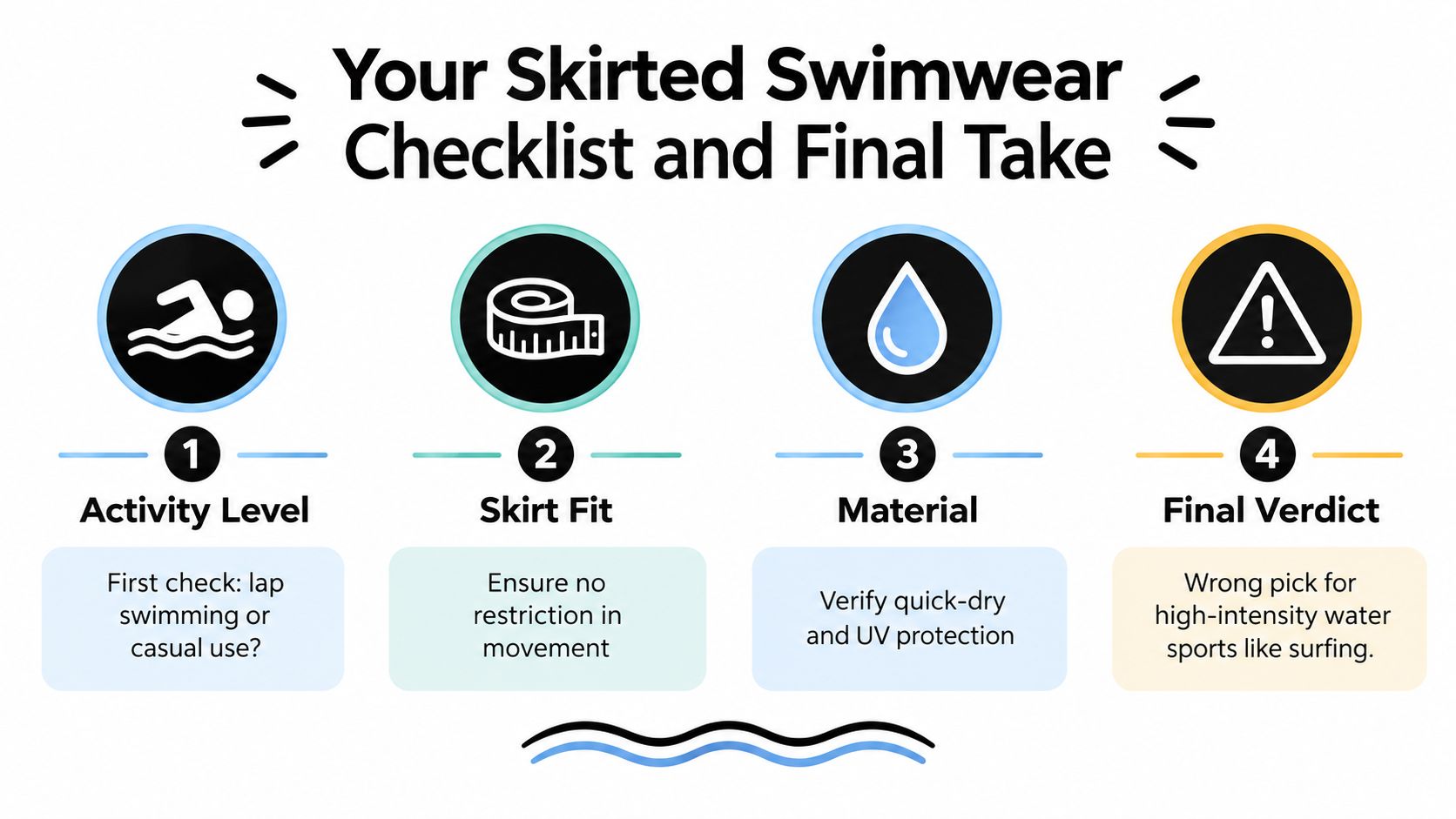
My verdict is simple. A swimming costume with skirt is a functional choice for the pool deck, resort, casual beach day, lake shore, and relaxed water time. It's the wrong pick for serious swimming, high-kick workouts, surfing, paddleboarding, or any activity where a saturated skirt can restrict movement or catch equipment. If your day centres on moving through the water, buy a fitted one-piece or athletic tankini with swim shorts. Save the skirted look for the slower hours.
Fashion, Bags & More offers swim and beach items alongside women's apparel, accessories, and coordinated pieces, with catalogue browsing and region selection for Canadian shoppers. Visit Fashion, Bags & More to compare skirted swimwear options, then check each listing's measurements, construction details, and return terms before ordering.